

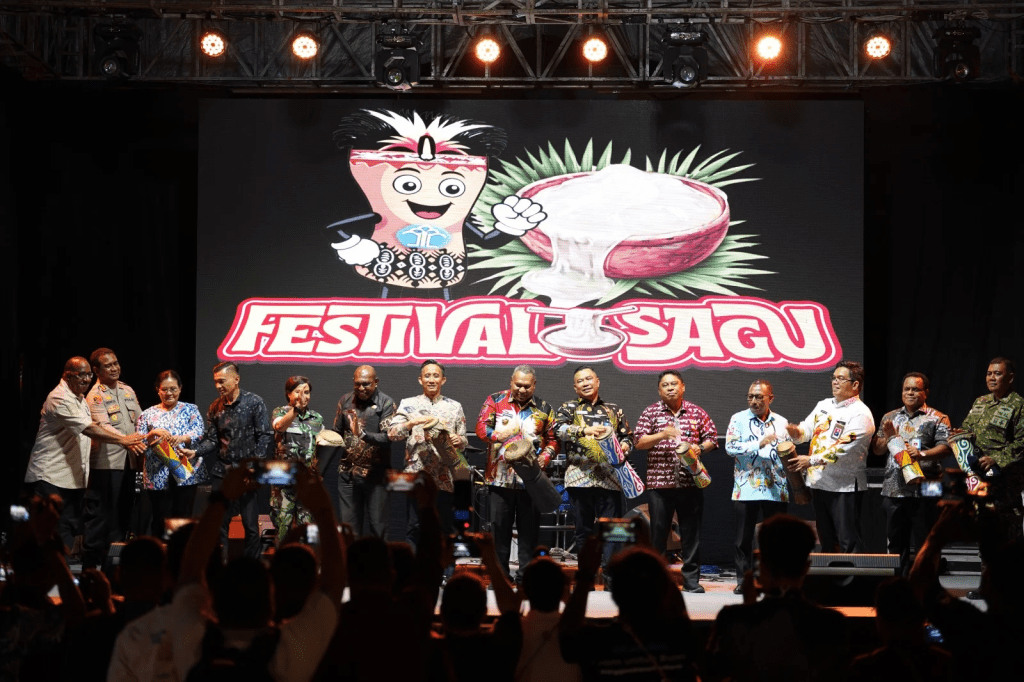
In the heart of Jayapura, a quiet but powerful message echoed during the Festival Sago Papua 2026: development does not always begin with something new, sometimes, it begins with rediscovering what has always sustained life.
As the festival opened on 24 April 2026, provincial leaders emphasized a phrase deeply rooted in Papuan identity. Sago is not just food, it is the tree of life.
More Than a Staple: A System of Life
For generations across Papua, sago has been a primary source of food, harvested from forests that grow naturally along rivers and wetlands. But beyond nutrition, sago represents resilience, a crop that requires minimal industrial input, yet sustains entire communities.
At the festival, leaders stressed that sago embodies local wisdom, independence, and sustainability. It is a reminder that Papua’s strength lies not only in its natural resources, but in how those resources are understood and managed. In this sense, sago is not just agriculture. It is a system, connecting land, knowledge, and community life.
From Tradition to Economic Opportunity
What makes the 2026 festival significant is not only its cultural celebration, but its economic direction. “The festival not only preserving our ancestral heritage but also managing sago for the welfare of the community,” said Deputy Governor of Papua Province, Aryoko Rumaropen, who opened the event.
The Papua provincial government is positioning sago as part of a broader local economic transformation, where traditional products are strengthened through innovation, protection, and market development.
During the event, Aryoko Rumaropen highlighted the importance of:
- Protecting Papuan products through geographical indications and intellectual property rights;
- Ensuring local innovations generate real economic value;
- Strengthening branding and market access for sago-based products.
The festival also served as a platform for dozens of local micro, small, and medium enterprises (MSMEs), many of them led by Papuan women. This reflects a growing shift: economic development in Papua is increasingly being driven from the ground up.
Sago as a Future Food
Beyond culture and economy, sago is a sustainable food source. Unlike many commercial crops, sago grows naturally in wetland ecosystems and requires relatively low environmental intervention. This makes it highly relevant in a world increasingly concerned with food security and climate resilience.
The message of the Festival Sago Papua 2026 is clear: Papua’s future does not lie in abandoning its traditions, but in strengthening and elevating them.
Sago stands at the center of that vision, as food, as culture, and as an economic pathway. As Deputy Governor of Papua Province mentioned during the opening, the festival is a commitment that Papua can move forward while remaining firmly rooted in its cultural values. And in that vision, the “tree of life” is not just a metaphor.


