

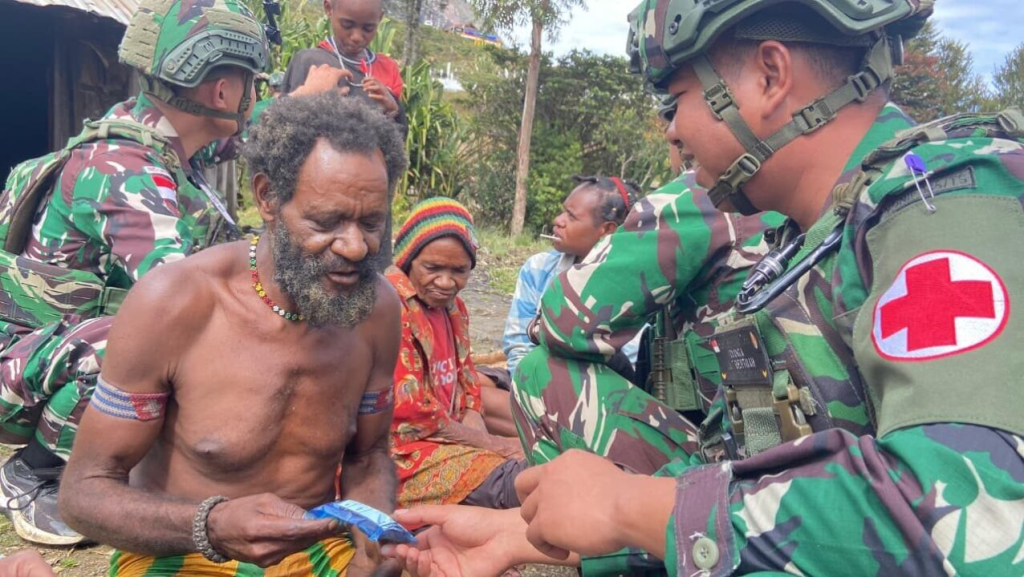
In the dense forests and rugged terrain that mark the frontier between Indonesia and Papua New Guinea, the border is more than just a line on a map. It is a living space, shared by communities, protected by soldiers, and shaped by a collective sense of responsibility.
Recent developments in the border region highlight a growing synergy between local communities and Indonesian National Armed Forces (TNI) in safeguarding sovereignty and stability along one of the country’s most remote frontiers.
A Call from the Community
On his new calls on 11 April 2026, Frangki Kuntuy, a key border district in Arso, Keerom Regency, Papua Province, has called on residents to actively participate in protecting the Indonesia-Papua New Guinea border.
His message is simple but powerful: border security is not only the responsibility of the state, but also of the people who live closest to it.
By encouraging vigilance, cooperation, and awareness, local leaders aim to strengthen community involvement in:
- preventing illegal cross-border activities
- maintaining social harmony
- protecting shared natural resources
For many residents, the border is not distant geopolitics, it is part of everyday life, where family ties, trade, and cultural connections often extend across both sides.
The Commitment of Soldiers
While communities play a crucial role, at the same time, on April 11, 2026, physical border security was carried out by TNI soldiers placed under the Border Security Task Force (Satgas Pamtas RI–PNG), including by Yonif 753/AVT Suminka lead by Second Lieutenant Inf Shofiyan, at MM 6.2A or the border point in the Bintang Mountains, Papua Mountains Province.
Patrol missions frequently involve:
- trekking through dense jungle and swamps
- crossing rivers and remote terrain
- verifying coordinates and physical conditions of border markers
Despite harsh conditions, these missions continue regularly, reflecting a long-term commitment to maintaining territorial integrity.
Security Meets Community
One of the defining features of border management in Papua is the close interaction between soldiers and local communities. Patrols are not conducted in isolation. Soldiers often, engage with villagers during missions, and share information about border conditions.
This collaboration transforms border security into a shared responsibility, where trust and communication are just as important as physical presence.
As seen in multiple patrol operations, community members are considered strategic partners in ensuring that boundary markers remain safe and that border areas remain peaceful.
Unlike many international borders, the Indonesia–PNG frontier is not heavily urbanized or fenced. Instead, it cuts through forests, rivers, and traditional lands where communities have lived for generations.
Efforts to safeguard the border therefore must balance security with sensitivity to local traditions and livelihoods.
A Shared Responsibility
The call from community leaders like Frangki Kuntuy, combined with the ongoing dedication of TNI patrol units like Second Lieutenant Inf Shofiyan’s unit, reflects a broader vision for Indonesia’s border regions:
- secure, but inclusive
- protected, yet connected
- firm in sovereignty, but rooted in community values
As Indonesia continues to strengthen its presence in frontier regions, the Indonesia-PNG border stands as an example of how state and society can work hand in hand.


