

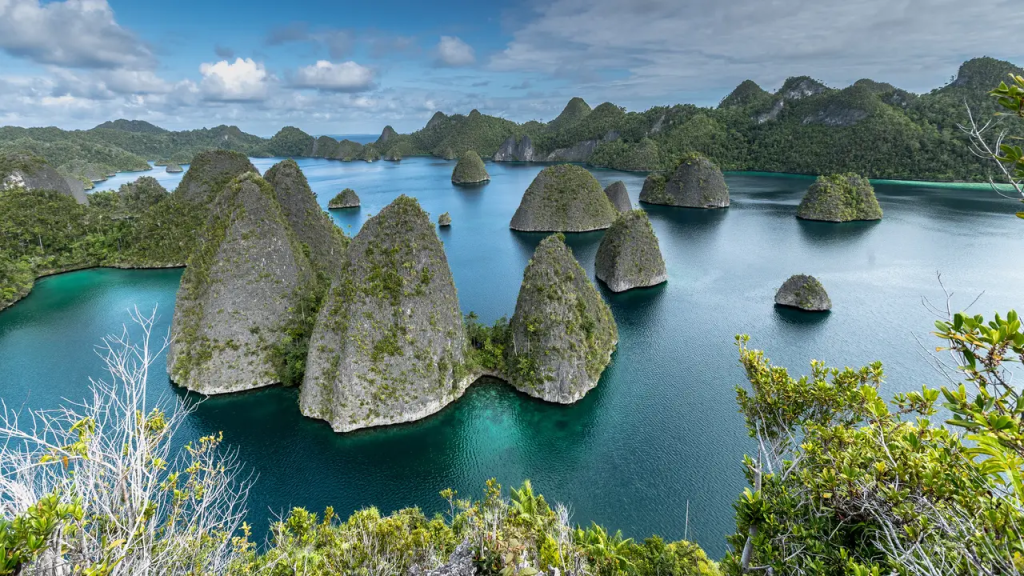
Raja Ampat is one of the most biodiverse marine areas in the world, with more than 1,200 species of fish, 600 species of coral, and 700 species of mollusca. Raja Ampat is not only rich in natural resources, but also in human resources. Raja Ampat is one of the sources of income for Indonesia and the Papua and West Papua regions from the Tourism and Fisheries sectors so that this area attracts many local and foreign tourists who want to enjoy the natural beauty there.
According to the Indonesian institute of Sciences (LIPI) Oceanographic Research Centre, in March 2019, Indonesia’s marine wealth reached a value of Rp. 1,772 trillion. One of the main contributors to this wealth is the fisheries sector, which is known as one of the largest potential sources for Indonesia. It’s no wonder that Indonesia is home to the second-largest fisheries sector in the world, contributing around Rp. 390 trillion to the Gross Domestic Product (GDP). Indonesia’s fisheries and marine tourism sectors promise enormous economic potential. Raja Ampat, an impressive region, plays a key role in enriching both sectors. With its significant contribution, Raja Ampat is living proof that the region has tremendous potential to develop a sustainable economic system based on conservation principles. However, Raja Ampat’s potential is not limited to the economic aspect. The region also plays an important role in providing protein sources and creating livelihood opportunities for local communities through the fisheries sector. As such, Raja Ampat is not only being talked about for its natural beauty, but also as a living example of how conservation and economics can co-exist for mutual prosperity.
Observing the potential and challenges that exist in Raja Ampat, the central government has designated the region as one of the four special economic zones (SEZs) in Papua and West Papua. The main focus of the Raja Ampat SEZ is the development of the tourism sector, particularly conservation-based marine tourism. The main objective of this initiative is to improve the welfare of local communities, preserve the environment, and support national integration. To achieve these goals, the central government, local government, and private sector have collaborated in a number of efforts:
- Improving accessibility and connectivity to Raja Ampat is done through the development and improvement of transportation infrastructure such as airports, ports, roads, and bridges.
- Improving the quality and capacity of tourism services through the construction and improvement of accommodation facilities, restaurants, information centers, and tourist activity centers.
- The attractiveness of Raja Ampat as a world tourist destination is enhanced through the development and promotion of various attractive and diverse tourism products and packages, such as natural, cultural, historical, adventure, and educational tourism.
- Participation and empowerment of local communities in the tourism sector is enhanced through assistance and training in management, entrepreneurship, marketing, and tourism skills.
- Protection and management of the environment and marine natural resources are improved through regulations and mechanisms such as zoning, concessions, licensing and supervision.
- Coordination and synergy between various stakeholders are enhanced in planning, implementing, and evaluating activities in the Raja Ampat SEZ.

 West Papua Now