

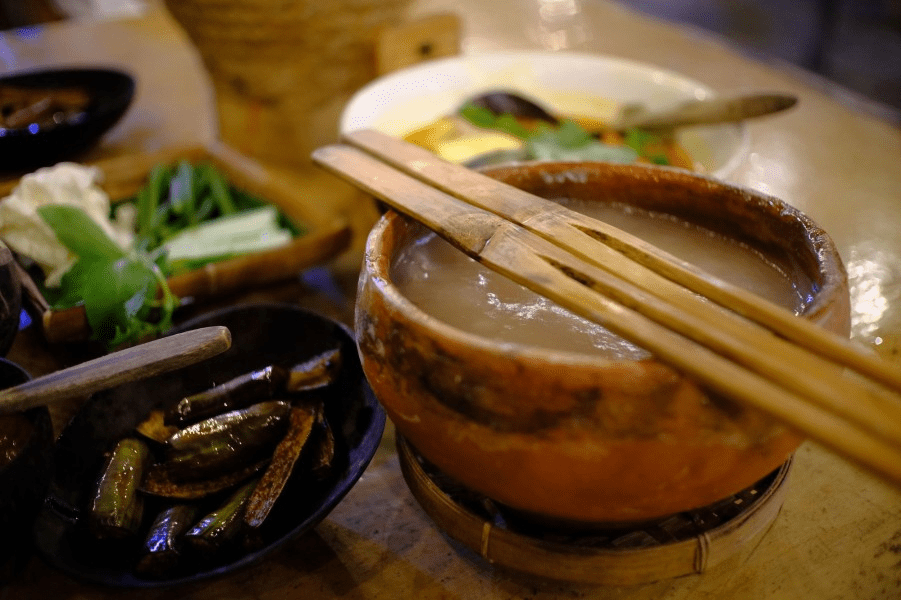
Papua is celebrated not only for its breathtaking landscapes with towering mountains, lush rainforests, and pristine seas, but also for its culinary richness, where tradition, culture, and community converge in every dish. Home to a wide diversity of ethnic groups, each meal in Papua tells a story, embodying heritage, resilience, and identity.
From Sago to the Sea
Take papeda, for instance. More than a staple, it is a pride dish of Papuans and a symbol of peace. Made from sago flour stirred with hot water until it forms a sticky porridge, papeda is traditionally served with a yellow-spiced fish broth. Beyond its cultural significance, it provides essential fiber and complex carbohydrates, sustaining the daily energy needs of Papuans.
Remarkably, Papeda is an acronym for “Papua Penuh Damai” (“Papua Full of Peace”). This interpretation highlights its symbolic significance: a dish that nourishes the body while embodying harmony with nature, fostering solidarity within communities, and conveying a vision of peace that has been passed down through generations.
Along the coast, Ikan Bakar Manokwari demonstrates how fresh seafood and local spices become a collective culinary experience. Marinated with shallots, garlic, turmeric, chilies, and lime, then grilled over open fire, the dish delivers a smoky aroma and flavor rooted in community tradition.
Familiar Flavors, Extraordinary Forms
Papua’s sweets carry their own narratives. Bagea, a crunchy biscuit made of sago and palm sugar, and kue lontar, a creamy custard tart introduced during colonial times, are both symbols of celebration. Bagea is enjoyed as a daily snack, while kue lontar is often reserved for Christmas or special occasions.
For those seeking the unusual, Papua offers sate ulat sagu. Harvested from aging sago palms, the sago worm is skewered and roasted until crispy outside and tender inside. The flavor is nutty, with a texture reminiscent of chicken or marrow. Far from novelty, it is a traditional source of protein and fat for many Papuans.
Spices, Condiments, and Beyond
No feast is complete without sambal colo-colo, a raw chili relish with shallots, green tomatoes, basil, and lime juice. The sharp, fresh flavors cut through the richness of grilled seafood and add complexity to every bite.
Other specialties highlight the diversity of Papua’s culinary map, like aunu senebre, a steamed mix of anchovies, rice, taro leaves, and grated coconut; norohombi, a steamed sago-based dish wrapped in banana leaves; and ikan bungkus, fish seasoned with indigenous spices and steamed in talas or bay leaves. Each dish offers a distinct texture and a unique story to tell.
Papua’s rivers and lakes also yield delicacies such as udang selingkuh, a freshwater lobster prized for its size and flavor. Together, these foods reflect an extraordinary reliance on local ecosystems and ingenuity in preparation. Papuan cuisine is not only about flavors but also about sustenance and survival. Sago remains the backbone, offering high fiber and zero cholesterol. Seafood and forest products supply vital proteins, minerals, and vitamins. Prepared by steaming, grilling, or roasting, the dishes preserve both nutrients and cultural continuity.
https://insiderindonesia.com/detail/690281/menyelami-kekayaan-makanan-tradisional-papua-yang-menarik

 West Papua Now