

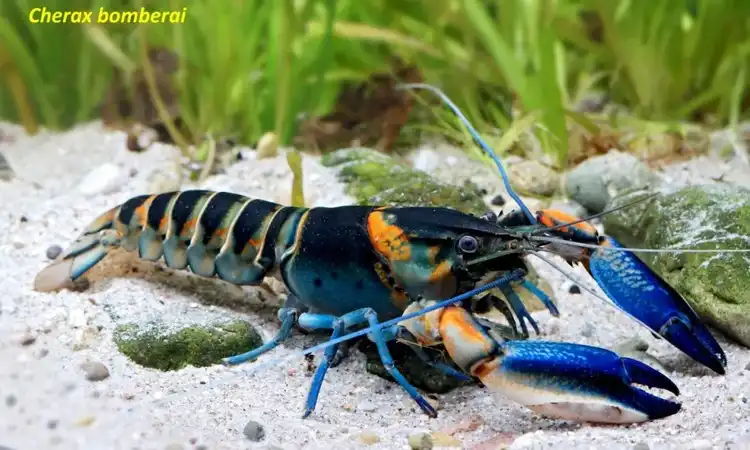
Researchers from the Faculty of Biology at Gadjah Mada University have successfully identified seven new species of freshwater crayfishes of the genus Cherax from the West Papua region. This research once again marks a significant contribution to the exploration of Indonesia’s biodiversity.
The results of this research were published in “Seven New Species of Crayfish of the Genus Cherax (Crustacea, Decapoda, Parastacidae) from Western New Guinea, Indonesia,” which appeared in the Quartile 2 (Q2) journal Arthropoda. This study is a collaboration between UGM, independent researchers from Germany, and a research institution in Berlin.
“Papua is a biodiversity hotspot that still holds many mysteries.” “This discovery is just a small part of the extraordinary potential that has yet to be explored,” said Dr. Rury Eprilurahman, a lecturer at the Faculty of Biology UGM and the second author of this publication, as quoted from ugm.ac.id.
It was mentioned that the seven species, namely Cherax veritas, Cherax arguni, Cherax kaimana, Cherax nigli, Cherax bomberai, Cherax farhadii, and Cherax doberai, were found in several remote locations in Misool, Kaimana, Fakfak, and Bintuni Bay.
All these areas are known as regions with freshwater ecosystems that are still relatively natural and have not been significantly affected by exploitation activities. The identification process is conducted in an integrated manner, combining morphological approaches and molecular phylogeny based on the mitochondrial genes 16S and COI. This approach ensures scientifically robust and taxonomically accurate results. “We not only look at the body shape and colour, but also compare their DNA to ensure that these are truly different species,” he explained.
Interestingly, most of the specimens studied initially came from the international ornamental aquarium trade. These species appeared with trade names such as Cherax sp. “Red Cheek,” Cherax sp. “Amethyst,” and Cherax sp. “Peacock” before being scientifically identified. This shows that the trade in exotic species can also open up opportunities for diversity research if managed collaboratively and ethically.
Furthermore, Dr. Rury emphasized the importance of collaboration between researchers and aquatic animal enthusiasts in uncovering species diversity. Some local collectors are even involved in the field search for specimens.
“The community of ornamental crayfish enthusiasts often serves as our initial source of information, which we then follow up with systematic research,” he said.
From the results of DNA and morphological analysis, the seven species belong to the northern lineage of the Cherax group, which previously included 28 species and has now increased to 35. This classification is important because it shows that the region of West Papua is an evolutionary centre for this group, distinct from species found in Australia or Papua New Guinea.
Each species has its own characteristics, whether in body colour, shape of the chelae (claw), or structure of the rostrum. These morphological features are important indicators in distinguishing a new species from its close relatives.
“For example, Cherax arguni has a body predominantly dark blue with cream stripes, and claws with distinctive transparent white patches,” he explained.
The results of the molecular phylogeny show that Cherax arguni is a close relative of Cherax bomberai, with a significant genetic distance to be classified as a separate species. This analysis was conducted using Bayesian and Maximum Likelihood methods with mitochondrial DNA data.
These genetic markers serve as the main basis for objectively determining interspecies boundaries. This finding reinforces the importance of genetic approaches in modern taxonomy, especially in tropical regions with high biodiversity. “Differences in mitochondrial DNA sequences can reach up to 11%, indicating a significant evolutionary isolation,” said Dr. Rury.
This discovery simultaneously highlights the urgency of conserving freshwater species in Papua that are vulnerable to exploitation and habitat degradation. According to him, many of these species live in small rivers and tributaries that have not been extensively mapped ecologically. Some of them are even known from only one location, making them very vulnerable to even the slightest environmental changes.
The original location of the specimens is not fully disclosed in the publication to preserve the natural population. In the future, further research and mapping of species distribution will be crucial to support data-driven conservation policies. “We must maintain a balance between scientific exploration and habitat protection, especially since many of these species live in areas increasingly affected by human activities,” added Rury.
This publication not only enriches scientific knowledge about Indonesia’s fauna diversity but also reinforces UGM’s position as a leading centre for tropical biological research. The involvement of the UGM Faculty of Biology in this cross-border project demonstrates globally competitive academic capacity.
“We believe that strong science must be rooted in local understanding, for a more sustainable future,” he hoped.
https://validnews.id/kultura/peneliti-ugm-identifikasi-spesies-baru-lobster-air-tawar-di-papua-barat

 West Papua Now