

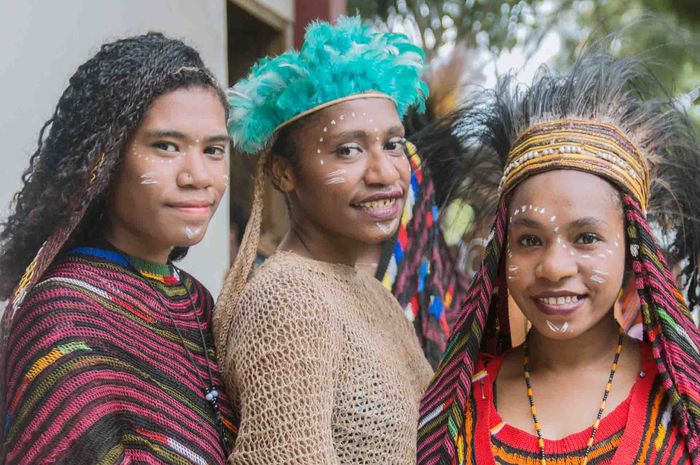
Indonesia is one of the countries with the greatest linguistic diversity in the world. From Sabang to Merauke, each region has its own languages and dialects that reflect local identity and culture. However, among all the regions, one stands out due to the extraordinarily high number of local languages, which is Papua. Located at the eastern tip of Indonesia, Papua holds an astonishing wealth of languages, with more than 270 regional languages still used by various tribes.
Administratively, Papua is divided into several provinces such as Papua, Central Papua, Highland Papua, West Papua, and Southwest Papua. Here, there are more than 270 regional languages still used by various tribes in the area. According to some studies, the number could reach more than 300, depending on the linguistic classification method.
One interesting fact is that the languages in Papua are not just dialects of one language, but truly different languages in terms of structure and vocabulary. These languages mostly belong to the Trans–New Guinea language family, but some do not have any linguistic kinship with each other, demonstrating a unique level of isolation and development.
There are three main factors that cause Papua to have such a large number of regional languages. First, the extremely rugged terrain of high mountains like the Jayawijaya Mountains, remote valleys like the Baliem Valley, tropical rainforests, and coastal areas. These geographical features caused many communities to live in isolation and separated from one another, so each community developed its own language without much outside influence.
In addition, Papua is home to hundreds of tribes with unique cultures and traditions. Each tribe has its own mother tongue that has been passed down orally through generations. Examples of tribes in Papua include: Dani, Asmat, Amungme, Korowai, Sentani, Biak, and others, each with their own language.
Another factor is the limited social interaction in the past. Due to harsh natural conditions and minimal infrastructure in the past, interactions between tribes or community groups were very limited. This caused the languages that developed to remain unique and not mix with each other. Each region or valley might have its own language that is not understood by groups in neighbouring valleys.
Each regional language is a repository of cultural identity and local knowledge. Regional languages contain folk tales and ancestral myths; knowledge about nature, flora, and fauna; belief systems and social values; oral literature such as pantun, poetry, and traditional songs.
Therefore, when a regional language becomes extinct, a part of the knowledge and culture it possesses is also lost. Therefore, preserving the existence of a language means preserving the heritage of civilization.
Although this wealth is extraordinary, there are concerns. Globalization and modernization have led young people to use more Indonesian or even foreign languages. Documentation of regional languages is also lacking, as most are only spoken and not much has been written or researched.
In addition, lifestyle changes and migration have led to a decrease in the use of regional languages in daily life. As a result, many languages in Papua are now on the brink of extinction. According to UNESCO, most languages in Papua fall into the “endangered” category because they are only used by the elderly and are not passed down to the younger generations.
Students can play a role in the Preservation of Regional Languages by learning new vocabulary from the regional languages of friends from different backgrounds; loving local culture as part of national identity; supporting language preservation, for example, by participating in folk tale competitions or compiling a simple dictionary with teachers.
Papua teaches us that Indonesia is truly an extraordinary country in terms of linguistic diversity. Hundreds of regional languages are not just tools of communication, but also pillars of culture, local identity, and historical heritage that must be preserved together.
The younger generation must be more aware, caring, and involved in efforts to preserve this linguistic diversity so that it does not become extinct.

 West Papua Now