

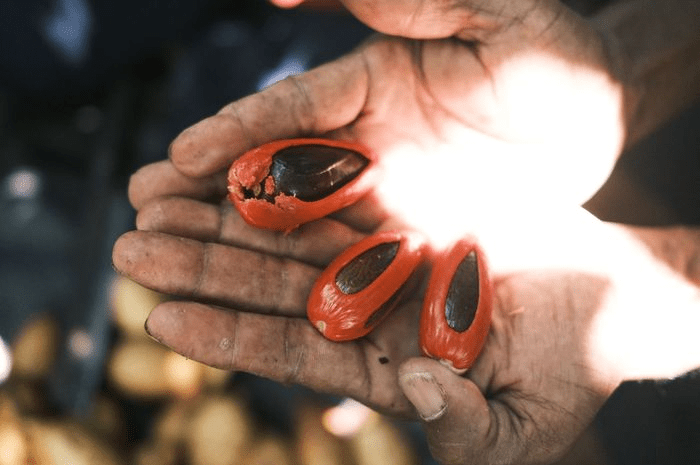
Within the dense forests of West Papua, a group of local women are trying to turn their fortunes around by processing nutmeg into a high-value commodity that is now being eyed by the global perfume industry. Led by 52-year-old Mama Siti, these women farmers are maintaining tradition, fighting for forest sustainability, and improving the welfare of their community through sustainable innovation.
This nutmeg tree is a legacy from their ancestors. In Fakfak, local people usually call this Papua nutmeg by the name tomandin.
“Nutmeg trees in the village forest of nutmeg hamlet, Pangwadar Village, Kokas District, Fakfak Regency, West Papua, on average, are already numerous, so the task of men is usually only to climb trees to take ripe fruit. For processing, so far there have been 118 women who clean the nutmeg, separate the flesh and seeds, then dry it in the sun,” Mama Siti explained.
Mama Siti is a nutmeg farmer and member of the supervisory board of a cooperative led by local women in West Papua. She is a role model in applying skill and diligence and leading women in processing nutmeg into ready-to-sell products.
For the local people of West Papua, the nutmeg tree symbolizes life itself. Considered “woman incarnate”, nutmeg trees play an important role in sustaining the community, and strict taboos prohibit the cutting down of these trees.
A deep respect for the nutmeg tree in Fakfak has created unique traditions around its harvest. These demonstrate Fakfak’s local people’s ongoing relationship with nature.
Two months before the harvest season, the local community will sit together and have a discussion referred to as “wewowo” in the local language. During this time, they conduct a ceremony where they symbolically “wear” the nutmeg tree with kebaya, a traditional outfit usually worn by women.
This is a sign that no one can harvest the young nutmeg and they call it “kera-kera”. The trees are “undressed” just before harvest, allowing the community to start harvesting nutmeg. After harvesting, they leave the land to recover naturally.
Unfortunately, the low selling price of nutmeg and the twice-yearly harvest cycle have left many farmers struggling economically. Many of them only have seasonal jobs and struggle to make ends meet.
“Nutmeg prices often fluctuate and are uncertain depending on the season. When the price drops, the income from nutmeg is only enough to fulfil our daily needs. When the harvest season ends, many of us are forced to change professions to support the needs of our respective families,” added Mama Siti.

 West Papua Now