

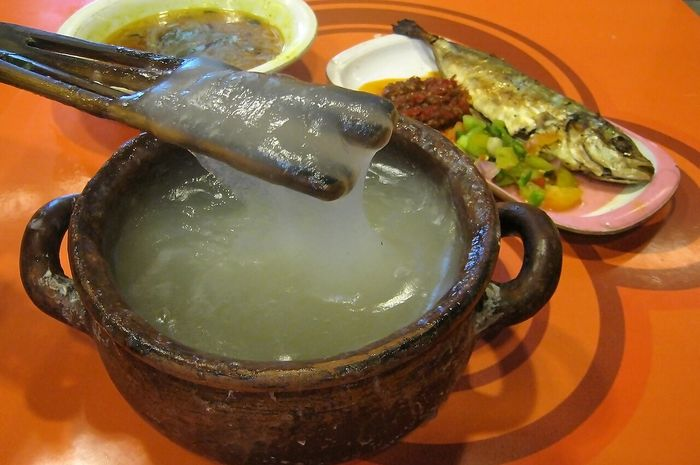
The Helai Mbai Hote Mbai tradition is known as a gastronomic cultural heritage of the Sentani people in Papua. Helai Mbai Hote Mbai is a tradition of eating papeda together in one container.
A researcher from the Centre for Manuscript, Literature, and Oral Tradition Research (PR MLTL) of the National Research and Innovation Agency (BRIN), Siswanto, in his research revealed that the tradition is not merely a ritual of eating together.
Furthermore, the tradition also reflects the social, cultural, and customary values embedded in the lives of the people around Lake Sentani.
However, as time progressed, this tradition faces various challenges that can potentially threaten its existence.
Siswanto explained that the Helai Mbai Hote Mbai tradition reflects togetherness and solidarity within the Sentani community. This tradition embodies the philosophy of family and togetherness.
This tradition strengthens relationships within the family and community. In addition, this tradition also serves as a space for discussion during shared meals.
“There, they discuss various family issues as well as problems in their village,” said Siswanto, as quoted from the BRIN website.
Siswanto added that this tradition also serves as a means of traditional diplomacy. The traditional leader known as Ondoafi uses this tradition as a medium of diplomacy before delivering important decisions.
Behind the meaning of Helai Mbai Hote Mbai, Siswanto revealed that several efforts have been made to preserve this tradition.
For example, the issuance of Regional Regulation Number 3 of 2000 which regulates the protection of sago forests.
In addition, the Helai Mbai Hote Mbai festival has also been held annually on September 28-30 in Abar Village, Jayapura Regency. This festival includes pottery making, sago processing, and a communal papeda eating event.
“This tradition is an important part of the cultural identity of the Sentani community.” However, modernization and globalization threaten its sustainability,” he stated.
Therefore, Siswanto hopes that concrete steps are needed in the form of education, outreach, and community support. The goal is for this cultural heritage to remain alive and thrive amidst the changing times.

 West Papua Now