

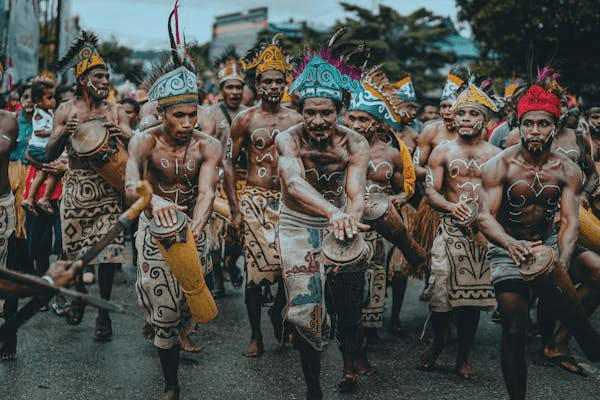
Papuan local wisdom serves as the foundation of a society that is deeply connected to nature and culture. The Papuan people have a worldview and traditions that have been passed down through generations, reflecting the balance between humans, nature, and their culture.
These are examples of the local wisdom of Papua that have been preserved and maintained until now, quoting from kebudayaan.kemdikbud.go.id and djkn.kemenkeu.go.id. This wisdom encompasses various aspects of life that prioritize harmony between humans and the surrounding environment.
One example of local wisdom found in Papua is Te Aro Naweak Lako, which teaches that “nature is me.” This principle comes from the Amungme Tribe and emphasizes the importance of love for nature. The Papuan people believe that humans and nature are an inseparable whole. The land is not just a place to live, but also a mother that gives life, nurtures, and provides protection. This wisdom also encompasses the view that every step humans take on earth must align with preserving nature.
Traditional ceremonies are an integral part of daily life in Papua. The death ritual performed by the Asmat Tribe is a form of respect for the deceased ancestors. This process not only serves as a way to communicate with ancestral spirits but also reminds the community of the importance of gratitude for the life given. In addition, the stone-burning ceremony, performed by many tribes, serves as a means for them to celebrate the harvest and togetherness.
The local wisdom found in Papua is also reflected in the wood carving art mastered by the Asmat Tribe. The wood carvings produced are not merely works of art, but also contain spiritual meanings and profound life values. Each carving contains symbols that depict the life of the community, their relationship with their ancestors, and the power of nature.
Besides woodcarving arts, traditional dances are also an important form of local wisdom. Dances such as the War Dance, Yospan Dance, and Aimaro Hena Taje Dance reflect the spirit of struggle, togetherness, and gratitude. This dance is often performed in traditional ceremonies and other important events, uniting the community through meaningful movements.
Cuisine also plays an important role in Papuan culture. Traditional foods like Papeda, made from sago and having a chewy texture like glue, have become symbols of Papua’s natural wealth. Papeda is not just food, but also holds significance as part of a tradition that connects people with the land of Papua.
Traditional Papuan clothing also reflects their rich culture. Men of the Dani Tribe wear Koteka or Holim, traditional clothing that reflects their closeness to nature. Papuan women, on the other hand, wear traditional clothing adorned with birds of paradise, bracelets, necklaces, and beads. This clothing is not only for ceremonies but also an integral part of their highly preserved cultural identity.
In conclusion, the local wisdom of Papua not only speaks about traditions and culture but also about how the community lives with a high awareness of nature. Every action they take reflects an awareness of maintaining the natural balance that has long been a part of their lives. Through this local wisdom, the Papuan people continue to maintain harmony between humans and nature, as well as preserve their rich culture.

 West Papua Now