

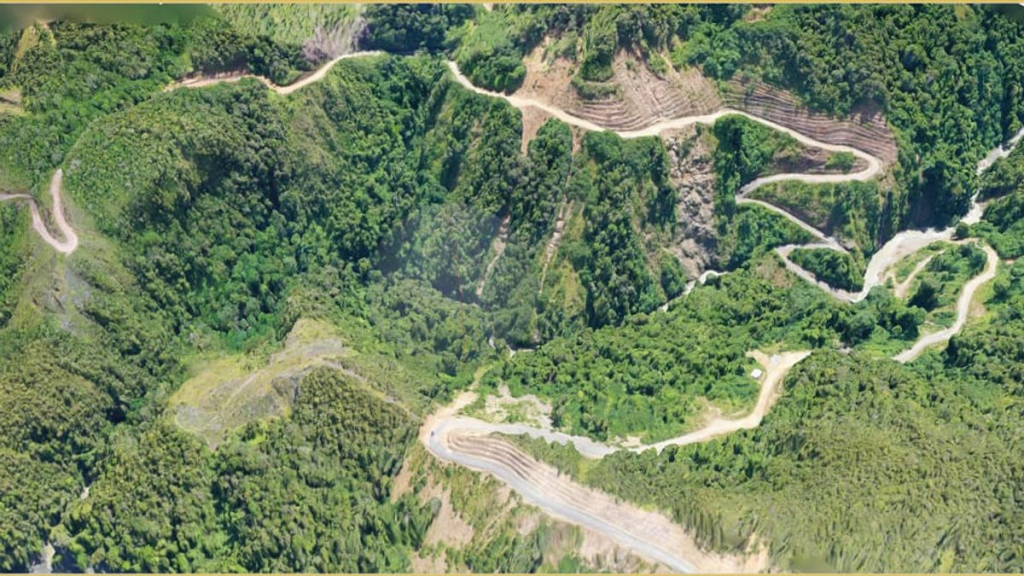
Since 2014, the Joko Widodo government has embarked on an Indo-centric infrastructure development drive that does not focus solely on the island of Java in order for all regions in Indonesia to achieve equitable development, which also applies to the Papua region. One particular development initiative having a significant impact on the mobility of the Papuan people is the construction of the Trans-Papua Road, which starts at the Domberai customary area, West Papua Province, to Bumi Anim, Papua Province, with a total length of 3,462 km, plus the improvement of road access in the border area for 1,098 km and the construction of the Youtefa Bridge with a length of 1.3 km in Jayapura.
Before these projects, the Papua region had significant access limitations and very inadequate infrastructure, which made many settlements remote and made daily life a challenge, with an example being footpaths that were muddy during the rainy season.
This ultimately resulted in difficulties in transporting essential goods and hindered economic activities, leading to increased prices of goods. Additionally, due to poor road access, Papuans also faced challenges in accessing healthcare and education services, forcing them to undertake journeys that took hours to days. This adversely affected the quality of life and well-being of the Papuan people.
With the construction of the Trans-Papua highway, the distribution of goods, particularly food items, has become easier, gradually reducing food prices. Furthermore, the Trans-Papua road also connects several districts that are quite far from the capital of Papua, Jayapura. Previously, residents of these districts had to walk for a month to reach Jayapura, but now they can cut down the travel time to just one day. This also makes it easier for the community to access healthcare and educational facilities, reducing the time required. Several remote and inland areas that previously lacked access and were isolated can now more easily access trade centres and public facilities.
Other infrastructure development projects in Papua include approximately 10 airports that are currently under construction, with some already completed, located in the provinces of Papua and West Papua. Not only that, there are currently ports connecting Jayapura, Sorong, and Merauke, which provide significant benefits for residents’ entrepreneurial activities and help reduce the prices of basic necessities.
Not only in the field of road infrastructure, the development carried out in Papua also includes the construction of a telecommunications network in the form of optical cable installation in the East Palapa Ring, so that community communication access is no longer hindered. In the health sector, the government is also striving to build several hospitals to complete the health facilities for the Papuan people, one of which was recently inaugurated is the TNI General Hospital LB Moerdani, in the Margamulya District, Merauke Regency.
Therefore, the developments that have been carried out directly impact the lives of the Papuan people, such as supporting local economic growth by providing easier access for farmers and fishermen to sell their produce to a wider market with lower transportation costs. The main objective of these developments is to equalize development across all regions of Indonesia to improve the welfare of the Indonesian people in conducting economic activities and to access public facilities such as health and education, which can be beneficial for the improvement of Human Resources in the future.

 West Papua Now