

There can be no doubt that Indonesia is rich in biodiversity. The sheer abundance and variety of plants and fruits found in the country means that many are still not widely known around the world.
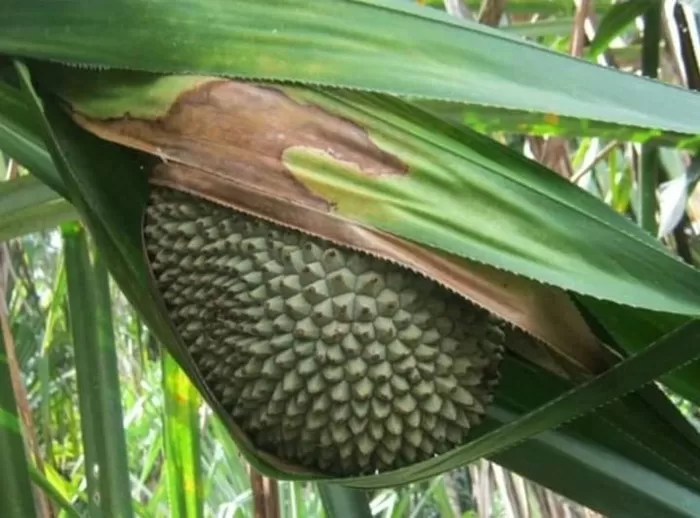
One such fruit is the unique Woromo fruit, or better known as forest coconut. It is an endemic fruit that is part of the pandan family (pandanaceae) that is found in Wamena, Central Papua.
It is also often referred to by the local people by many names such as karu, hekali, helak, owadak, and forest coconut.
Although it is known as forest coconut, this fruit is actually more similar to the jackfruit or durian, with skin that is thin and thorny, while its flesh is harder, similar to a coconut.
The colour of this fruit’s flesh varies, from white, yellowish-white to orange, with a smooth to slightly firm texture.
Woromo fruit can be consumed directly or processed. Some common ways of processing are by means of barapen or smoking which gives it a savory aroma and taste.
Quoted from wikipedia.com woromo fruit contains unsaturated fatty acids consisting of oleic acid, linoleic acid, palmitic, omega-9, omega-6, omega-3, DHA, and EPA. Woromo fruit has the same carbohydrate content as rice.
Woromo fruit has various health and economic benefits. Here are some of the benefits of consuming Woromo fruit that can be found from relevant sources:
Treating heart disease, cholesterol, and gout, increase male stamina, treating the causes osteoporosis, cancer, and tumours, to curing paralytic disease.
It can be processed into soap, oil, capsules and as food ingredients in the daily life of the indigenous people of the central mountains of Papua.
However, keep in mind that these benefits still require further research to ensure their truth.

 West Papua Now