

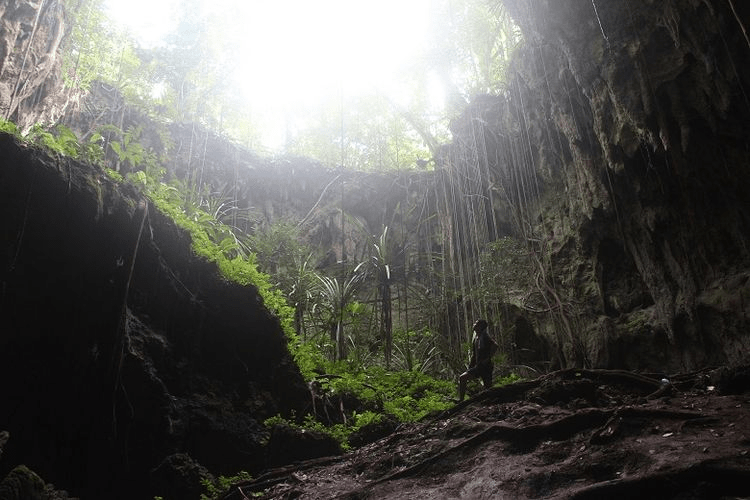
Binsari Village in Biak Numfor Regency, Papua, is being prepared as a tourism village. This village has World War II tourist attractions, one of which is Goa Jepang (Japanese Cave). “The Tourism Office is very optimistic that Binsari Village, which has the Japanese Cave as a historical relic of World War II, will become a Biak Numfor tourist village,” said the Head of the Biak Tourism Office, Onny Dangeubun, ad quoted from Antara, Tuesday (10/17/2023).
Binsari Village is one of five tourism villages pioneered in the program devised by the Ministry of Tourism and Creative Economy in collaboration with the Biak Numfor Regency Tourism Office this year. Binsari Village was pioneered into a tourist village because it was considered to possess the potential to attract tourists, especially those interested in the history of World War II, according to the Expert Staff of the Papua Provincial Culture and Tourism Office, Jimy E. Mehue.
Tourism villages are said to meet three components of development, namely having tourism potential, community interest and readiness for the development of local tourist destinations, and having a unique tourism village concept. Meanwhile, from the positive side of tourism village development, there are attractions as the main draw of tourist villages.
According to the Head of Team II of the Directorate of Destination Development Deputy for Destination and Infrastructure of the Ministry of Tourism and Creative Economy, Anastasia Manuela, the Government through the assistance of the Ministry of Tourism and Creative Economy develops tourism villages to increase village economic growth. Tourism village activities are considered to be able to provide people’s welfare, resolve unemployment, preserve nature, the environment and resources, as well as promote culture and maintain local wisdom. The development of tourism villages is also a form of accelerating integrated village development to encourage sustainable social, cultural, and economic transformation of villages.
Moving forward, Binsari Village is being pioneered for designation as a tourist village to support the tourism and cultural sector of the Papuan people. Because it is still being pioneered as a tourist village, its contribution to local original income receipts (PAD) is managed by indigenous peoples. If it becomes independent, the management must be more professional by charging visitors, and cooperating with related agencies in Biak Numfor Regency.

 West Papua Now