

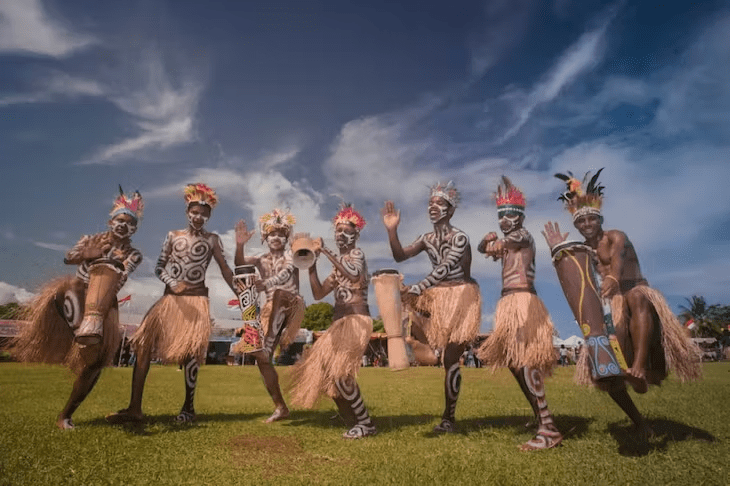
Indonesia is well-known as a diverse country. One form of diversity can be seen from the dances originating from every tribe and region. The easternmost region, Papua, has its share of various types of dances with their own uniqueness.
Papuan regional dances contain meanings that are closely related to the daily lives of its people. The dance movements also reflect the identity of the Papuan people themselves. Here are some Papuan regional dances that are rich in meaning.
1. War Dance
The War Dance is a type of dance performed by at least seven male dancers in groups. This dance is generally held in the field in the evening or late at night. Currently, the War dance is performed to welcome tourists who come to Papua.
War Dance has a deep meaning as a form of gratitude to the Creator and respect for ancestors. This dance symbolizes the heroism and valour of the Papuan people.
2. Awaijale Rijale Dance
The Awaijale Rilejale dance is a Papuan regional dance originating from the Sentani tribal community. This dance depicts the natural beauty of Lake Sentani when entering dusk, where residents return home from work by boat.
The dance is generally performed by a group of male and female dancers. The dancers will wear a traditional outfit called Pea Malo made from genemo tree fibres and complemented by hamboni jewelry or beaded necklaces.
3. Musyoh Dance
The Musyoh dance, which is often known as the expulsion dance is a sacred dance originating from Papua. In local belief, if someone dies due to an accident, then his spirit remains restless. Therefore, this dance is performed to appease the spirit of the deceased.
As quoted from Kompas.com, Thursday (21/9), When the Musyoh dance is performed for driving away spirits or for sacred purposes, then it is performed by male dancers. If it is for welcoming guests or visitors, then the dance is performed by female dancers.
4. Yospam Dance
The Yospam dance or better known as Yosim Pancar dance is a traditional dance originating from the Sarmi area on the north coast of Papua. Derived from the words Yosim and Pancar, this Papuan regional dance is used to express joy.
The dance is generally performed in pairs or groups by male and female dancers. This traditional dance has meaning as a sign of friendship, or a social dance for the Papuan people.
5. Sajojo Dance
The Sajojo dance is one of Papua’s most popular regional dances. This dance is often performed on various occasions and events, be it entertainment, traditional or cultural events. The dance performance is accompanied by a song called Sajojo.
The accompaniment song tells the story of a girl who is idolized and loved in her hometown. This dance movement is so distinctive and energetic that it depicts the cheerful feelings of the dancers.
Those are some Papuan regional dances that have many meanings. The Ministry of Tourism and Creative Economy has also included some of these dances as part of Indonesia’s cultural charm that attract tourists.
https://www.goodnewsfromindonesia.id/2023/09/21/tarian-daerah-papua-yang-penuh-makna-dan-pesona

 West Papua Now